
Convert video to bink
-
Open the
Bink2ForUnreal.exein...\Pixotope\[Version number]\Pixotope Engine\Engine\Binaries\ThirdParty\Bink
-
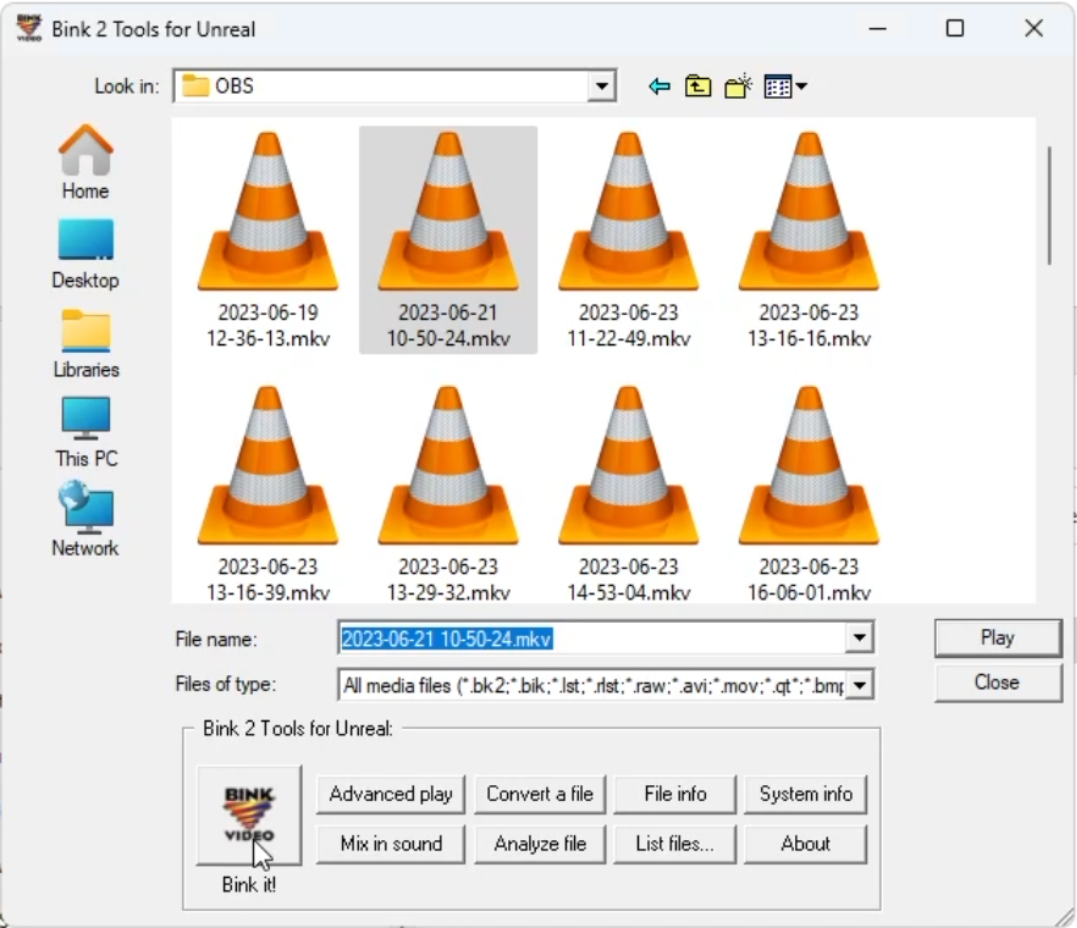
Select a video file and click "BINK VIDEO"
-
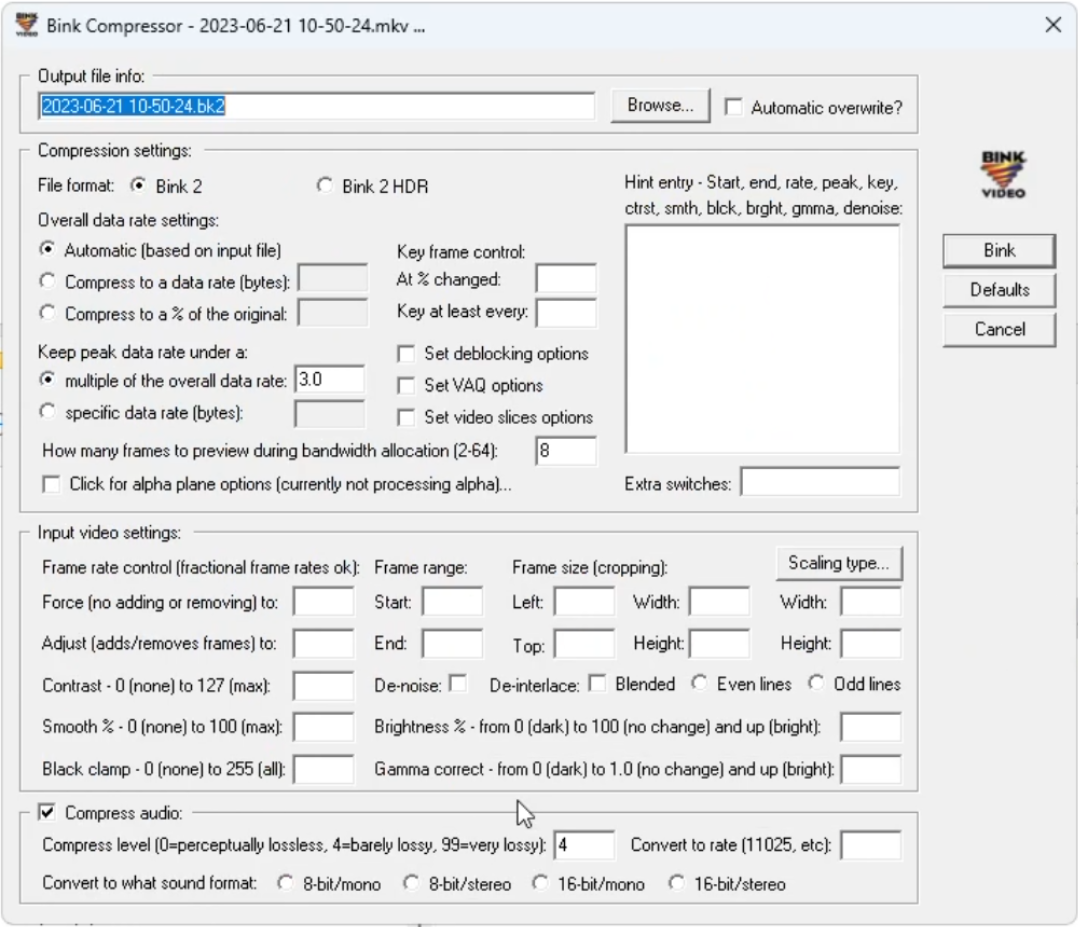
Specify the encoding options
-
Click "Bink” to start the encoding

Copy to content folder
-
Create a
Moviesfolder in[Linked project]\Content\ -
Copy the video to into this folder
Create Bink Media Player
-
Right click in the Content Browser
-
Create a Miscellaneous > Bink Media Player asset

-
Open the asset and choose the created file as your source

-
For later Blueprint control make sure Start immediately and Looping are checked
-
you need to have "start immediately" checked and then pause it
unchecking it will not make it work in a blueprint

-
You need one player per video stream.
Create Media Texture
-
Right click the Bink Media Player asset in the Content Browser
-
Click "Create Media Texture"

-
Drag the created Media texture onto your object
-
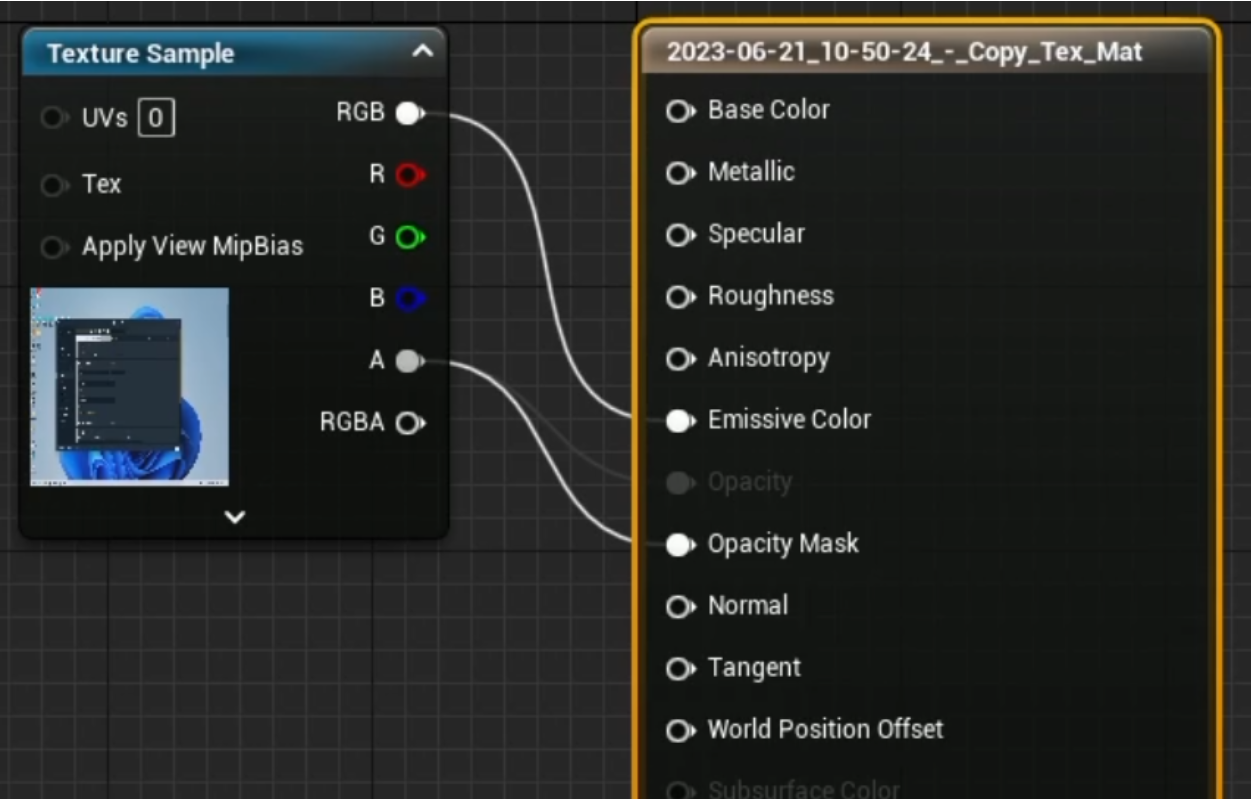
Double click the material to open the Material Editor
-
Plug the RGB texture output into the Emissive Color to simulate an actively lit display
-
Correct the scaling of your object to fit the video’s aspect ratio
Create a blueprint
-
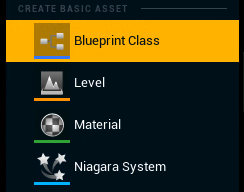
Create an Actor based Blueprint Class by right clicking in the Content Browser and selecting Blueprint Class and name it for example BP_bink

-
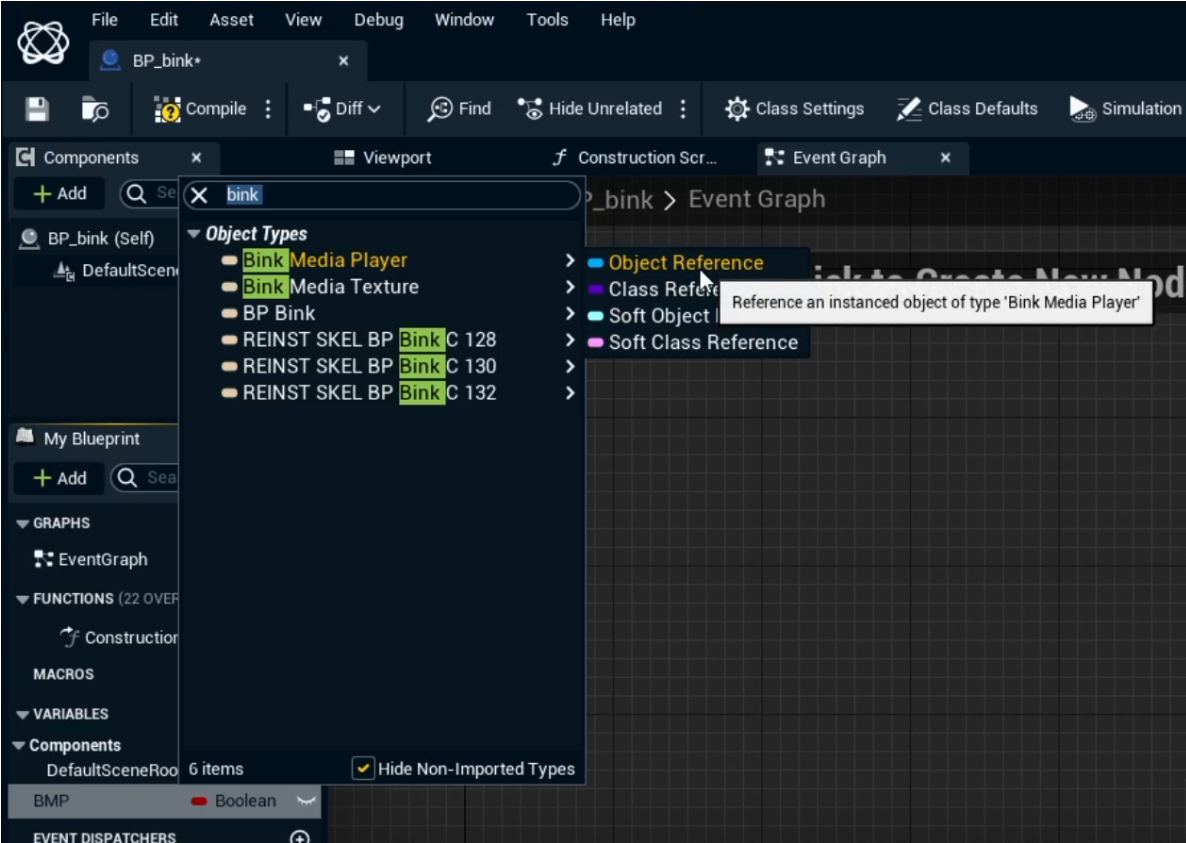
Create a Bink Media Player > Object Reference variable
-
Create a new variable by clicking on the + icon

-
Select Bink Media Player > Object Reference as the variable type
-
Click the Eye icon and then "Compile" to expose it to the Details panel
-
Drag it into the level
-
-
Link the Bink Media Player asset to it
-
Select the blueprint in the level and go to the Details panel
-
Select the Bink Media Player asset you had created before

-
Add blueprint events
-
Go to the Event Graph of the blueprint you added
-
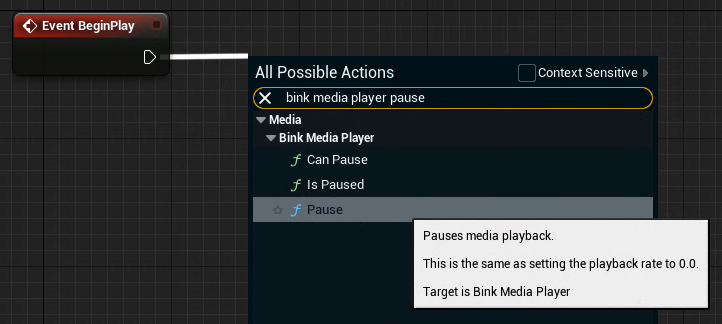
Add Bink Media Player > Pause function on BeginPlay using the Bink Media Player Object Reference as a target

-
Add a Play control
-
Right click to search for Add Custom Event, add it and name it "Play"

-
Add a Bink Media Player > Play function and add the Bink Media Player Object Reference as a target


-
You can also use Set Rate for Pause and Play
-
Rate = 0.0 → Pause
-
Rate = 1.0 → Play
Example blueprints for more advanced controls
Checkout the example blueprints for more advanced controls like
-
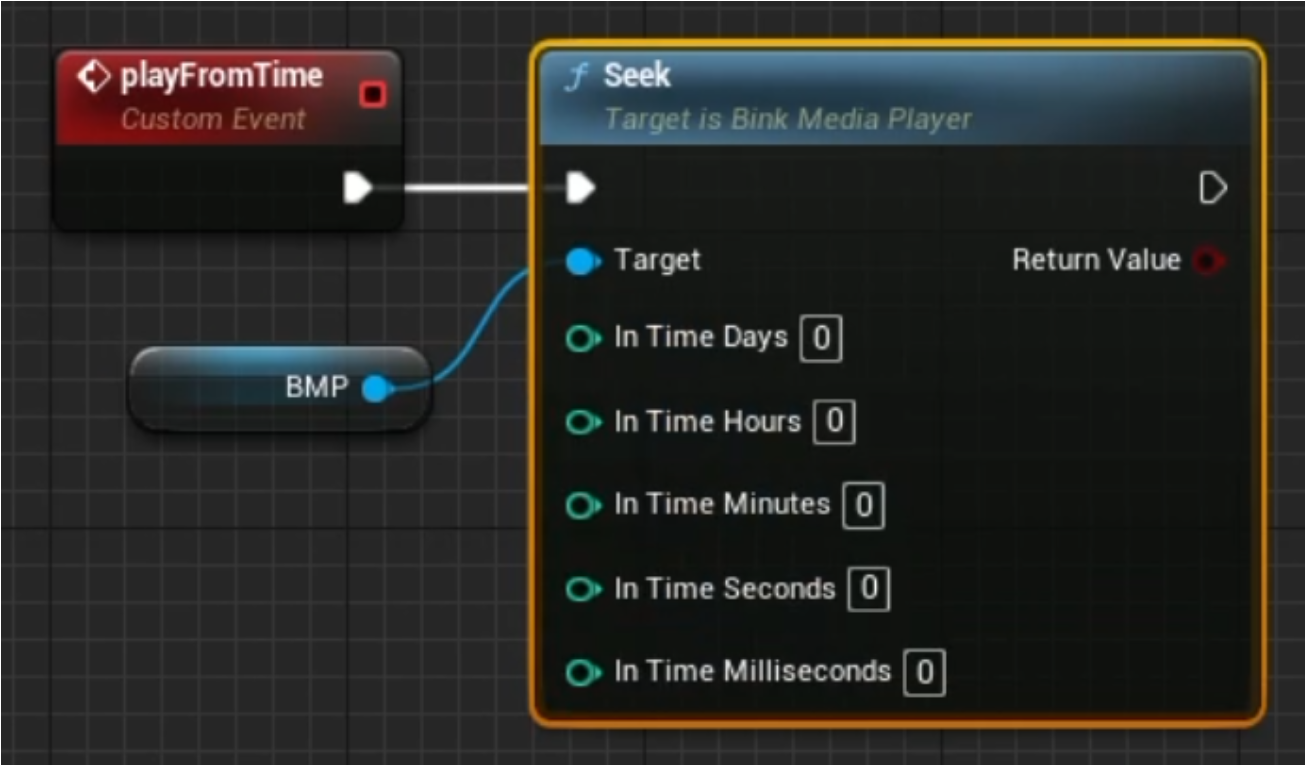
Play from a specific time
-
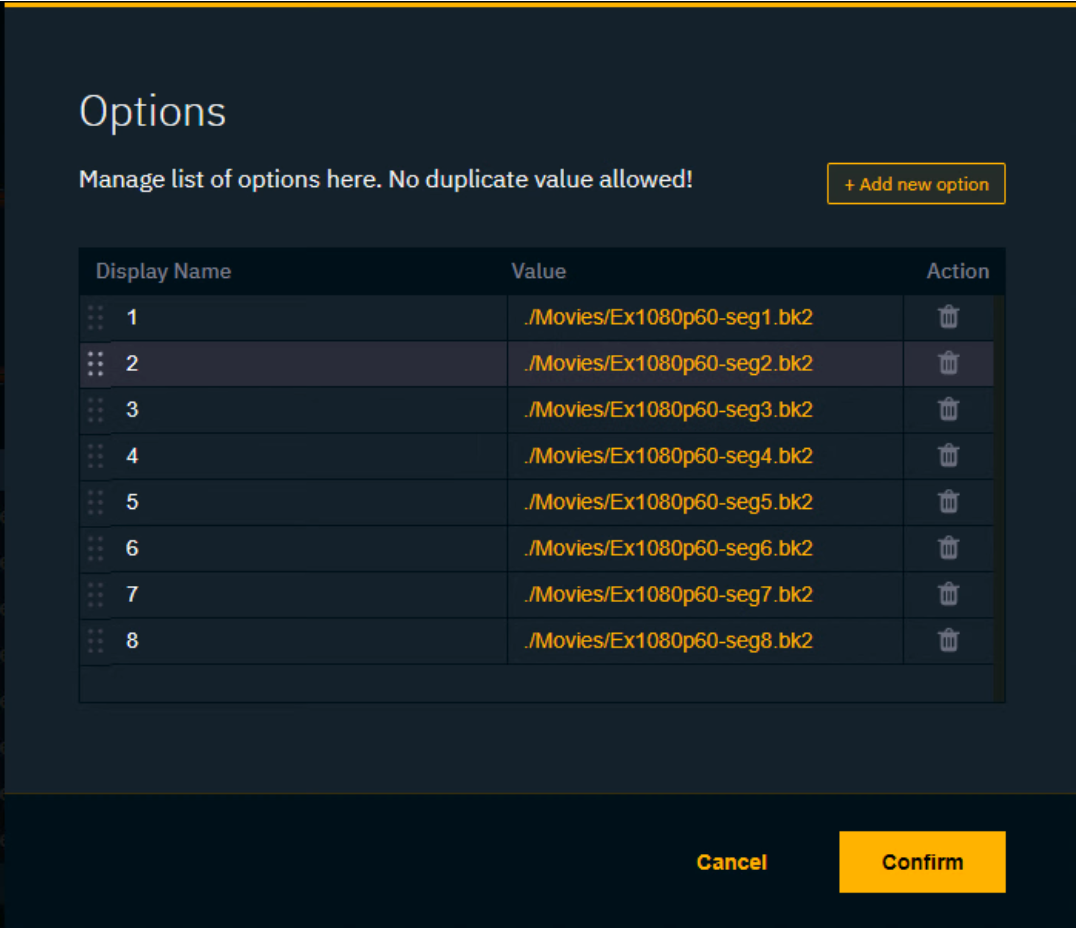
Change the video source URL
Click to expand...
Play from time

Change the video source URL
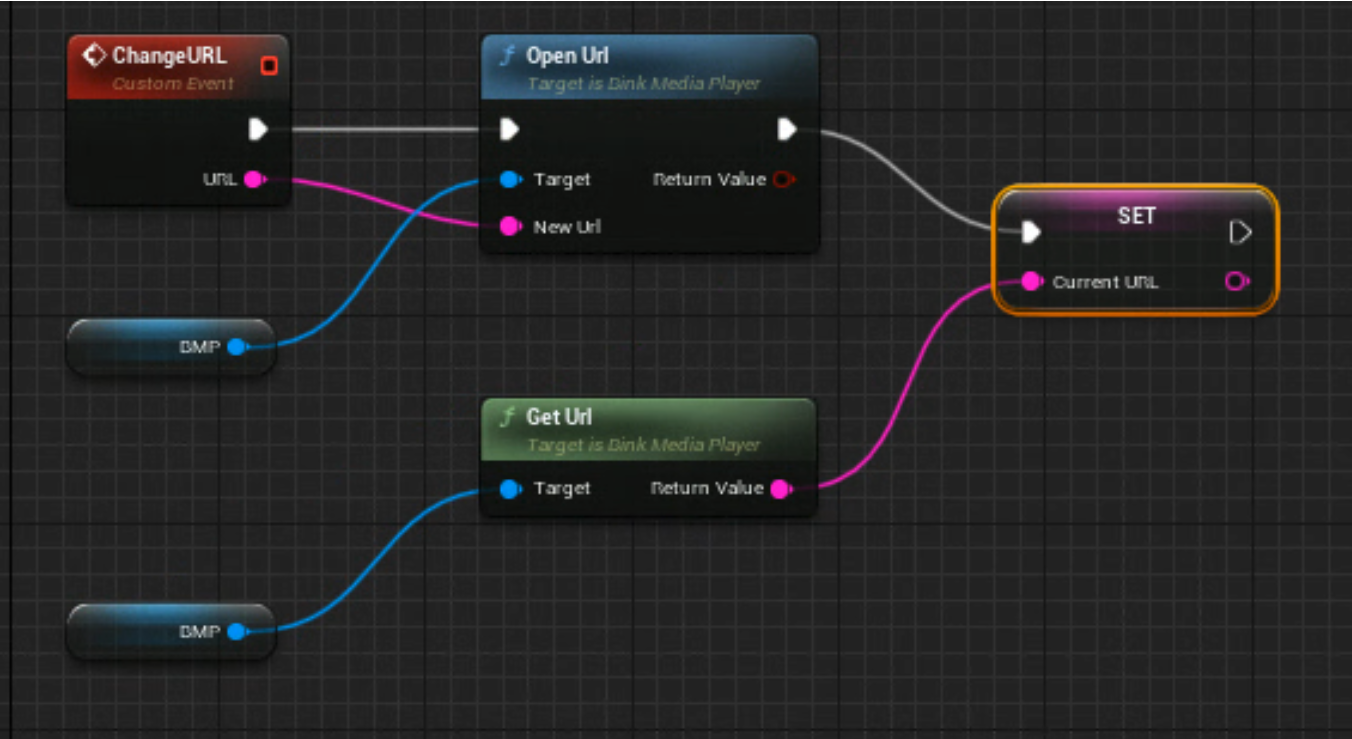
This function can be used in combination with a Tab, Dropdown or Playlist widget inside the Control panel.

Control the video playback via a control panel
-
Create a new control panel
-
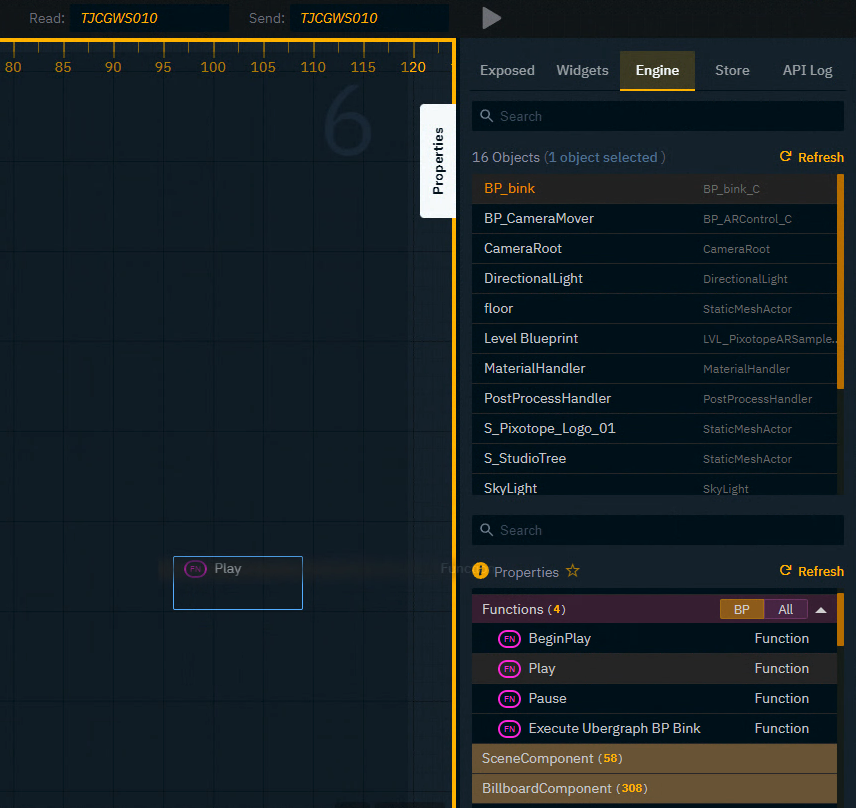
Select the BP_bink object in the Engine tab
-
Drag the function to control onto the canvas and select a Trigger widget

-
Repeat this step with other control functions you have created
Learn more about Creating a control panel - PRODUCTION